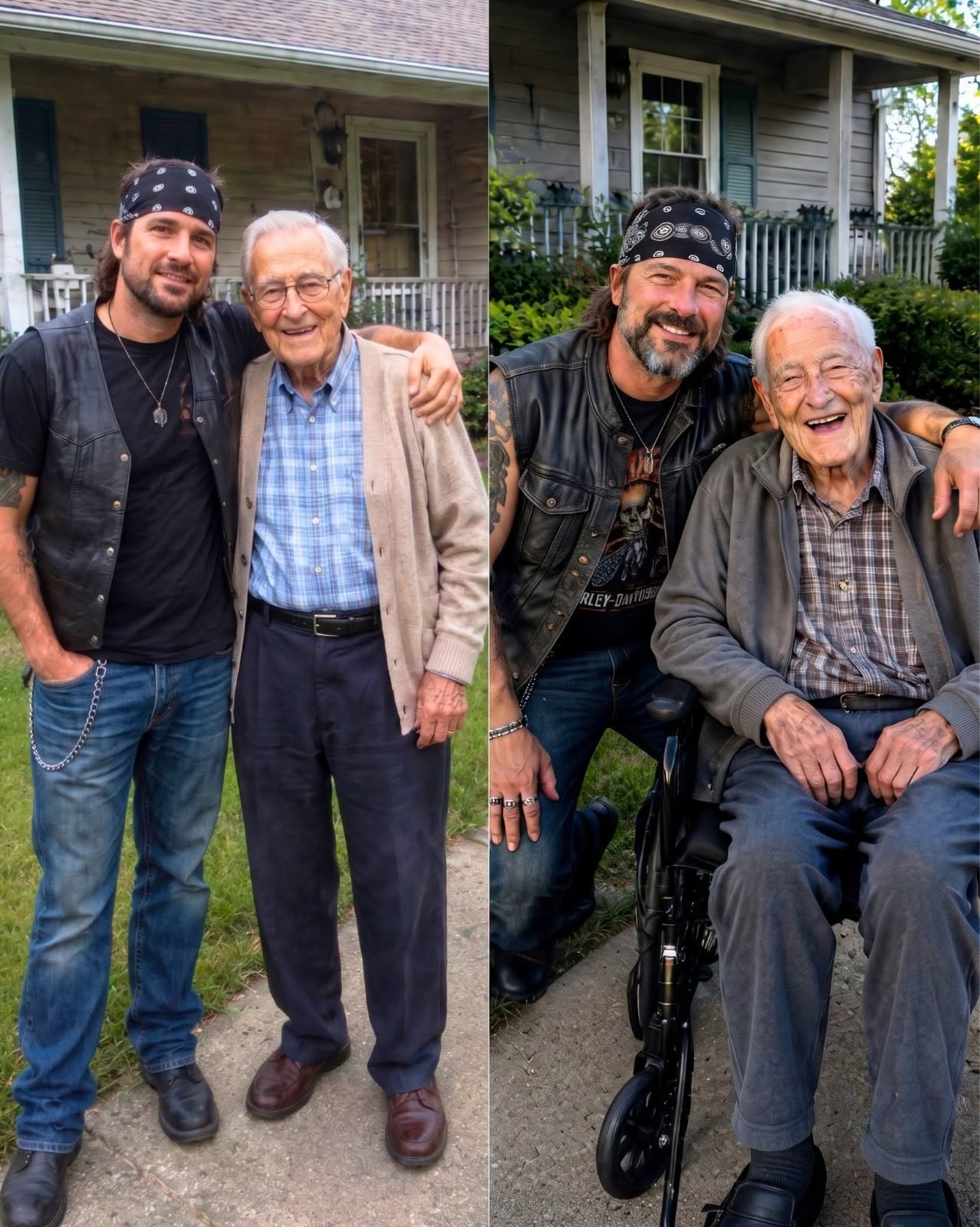
Pendant douze ans, j’ai apporté des courses à mon voisin âgé chaque dimanche. Je n’ai jamais accepté un seul dollar de sa part. Mais après ses funérailles, son avocat m’a arrêté près du cimetière et m’a posé une vieille valise cabossée dans mes mains. « M. Harrison a laissé des instructions très précises », a-t-il dit. « Ceci t’appartient. » Je fixai le cuir fissuré et la poignée enveloppée de ruban isolant noir. « À moi ? Pourquoi ? » L’avocat m’a tendu sa carte. « Ramène-le chez toi. Ouvre-le là. Alors appelle-moi… Voir plus
Partie 3 : Notre accord du dimanche
Au début, je pensais que l’arrangement durerait quelques semaines.
Ezra me donnait une liste de courses le dimanche matin. Je faisais mes courses pour ma propre famille, récupérais ses affaires et les apportais l’après-midi.
Chaque semaine, il essayait de me payer.
Et chaque semaine, je refusais.
« Anthony, les courses coûtent de l’argent », dit-il après notre troisième dimanche.
« J’ai entendu des rumeurs. »
« Alors prends ça. »
Il poussa plusieurs billets de loi sur la table.
Je les ai repoussés.
« Considère les courses comme le paiement du café. »
« Une tasse de café ne vaut pas soixante-trois dollars. »
« Tu fais un café exceptionnel. »
Le dimanche suivant, il glissa de l’argent dans la poche de ma veste.
Je l’ai trouvé avant de partir et je l’ai mis sous son sucrier.
La semaine suivante, il a caché de l’argent sous le tapis côté passager de mon camion.
Je l’ai découvert deux jours plus tard et je l’ai retourné dans une enveloppe intitulée :
NICE TRY.
For months, we continued our ridiculous battle.
Eventually, Ezra stopped trying to hand me money.
Instead, he fed me.
He kept oatmeal cookies in a metal tin on the counter. In winter, he made soup. In summer, he served lemonade in glasses that had belonged to his wife.
Her name was Helen.
They had met at a county fair when they were seventeen.
“She beat me at a ring-toss game,” Ezra told me. “Then she refused to give me the stuffed bear she won.”
“So you married her to get it back?”
“That was the plan.”
“Did it work?”
“No. She kept it for fifty-eight years.”
Helen had passed away shortly before Rachel and I moved into the neighborhood.
Ezra still kept her coffee mug in the cabinet beside his own.
He never used it, but he never moved it either.
Most Sundays, I stayed for thirty minutes.
Some Sundays, I stayed for two hours.
We talked about the neighborhood, sports, old cars, motorcycles, business, family, and the increasing price of coffee. Sometimes Ezra told stories about his younger years. Other times, I complained about my shop or worried aloud about raising a daughter.
And sometimes we simply sat at the table while jazz played on the radio.
Those were the Sundays I came to value most.
There was no pressure to be entertaining. No expectation that either of us needed to solve anything.
We were simply two people sitting in the same room, making the room feel less empty.
Part 4: The Family Next Door
It did not take long for Ezra to become part of our family.
Emma was seven when she first came with me to deliver groceries.
She walked into Ezra’s kitchen, noticed a wooden model airplane on the shelf, and asked six questions without taking a breath.
“Did you make that? Does it fly? How long did it take? Is it real wood? Can I touch it? Can you teach me?”
Ezra looked at me.
“Does she ever stop?”
“Only when she sleeps.”
“I heard that,” Emma said.
The following Sunday, Ezra had placed two pieces of wood, sandpaper, and a small hand drill on the table.
Over the next month, he helped Emma build a birdhouse.
He never completed a step for her simply because it was difficult. He showed her how, allowed her to make mistakes, and waited patiently while she tried again.
When the birdhouse was finished, one side leaned slightly.
Emma looked disappointed.
“It’s crooked,” she said.
Ezra tilted his head.
“So is my porch. It has survived seventy years.”
They painted the birdhouse blue and hung it in our backyard.
For years, sparrows nested inside it every spring.
Ezra attended Emma’s school concerts, birthday dinners, and high school graduation. At Christmas, he came to our house. At Thanksgiving, he insisted on carving the turkey because he claimed I was “committing an offense against poultry.”
When Emma turned ten, he gave her a small wooden box with her initials carved into the lid.
She still keeps important letters inside it.
When she was thirteen and angry at everyone, Ezra was one of the few adults she willingly spoke to.
One Sunday, she disappeared into his kitchen while I repaired a loose porch railing. She stayed inside for almost an hour.
“What did you say to her?” I asked him later.
“Very little.”
“She doesn’t talk to me like that.”
“You try to fix her problems before she has finished describing them.”
“I’m her father. That’s my job.”
“Your job is to make sure she knows she does not have to carry them alone.”
That was Ezra’s gift.
He listened without making people feel weak for needing to speak.
Over time, I began telling him things I had never told anyone except Rachel.
My father had left when I was eleven.
At first, he called every week. Then once a month. Then only on birthdays. Eventually, the calls stopped.
I told myself I did not care.
Ezra never challenged that lie directly.
One afternoon, after I spent twenty minutes complaining about a customer who had broken a promise, Ezra said, “You are angrier than the situation requires.”
“The man owes me three thousand dollars.”
“I understand.”
“Then why shouldn’t I be angry?”
“You should. But some of that anger belongs to someone else.”
I knew exactly who he meant.
“My father has nothing to do with this.”
Ezra took a slow sip of coffee.
« Probablement pas. Tu veux un cookie ? »
Il ne poussait jamais.
Il a planté une idée et m’a fait confiance pour y revenir quand je serais prêt.